
Set 1
Jack Straw , Dire Wolf , Cassidy , They Love Each Other , Mama Tried - Me And My Uncle , Loser , Looks Like Rain , Deal , Let It Grow
Set 2
Samson And Delilah , Candyman , Estimated Prophet - Eyes Of The World - Not Fade Away - One More Saturday Night [1]
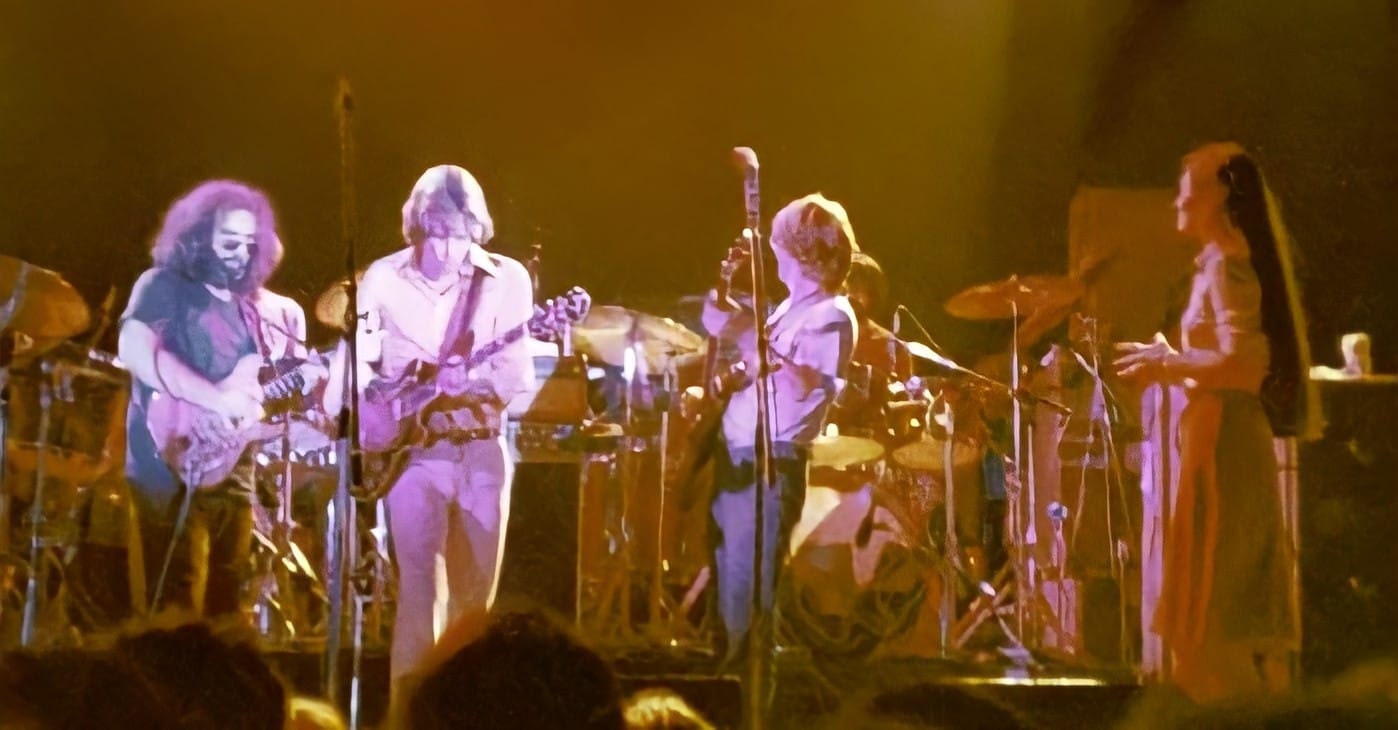
Throughout the 1980s and 1990s, the Grateful Dead's Winter touring pattern was pretty well established. They would have an extended stand in Oakland leading up to New Year's Eve, and then take about six weeks off. There would be a couple of shows in February, and then they would hitch up the wagon and start touring the East Coast some time in March. Most of January and February were vacation time for the extended Grateful Dead touring operation, except of course for Jerry Garcia who generally tried to jam in as many of his own shows as he could during the winter break.
However convenient and sensible this touring pattern was, the Dead did not fall into it lightly. At least once they tried a completely different approach to the winter. In January of 1978, instead of going on break, the Grateful Dead toured the West and upper Midwest. It made for a very different year, and they played some great music. Of course, all the evidence suggests that the little tour was not a financial success, so nothing like it was ever done again. This post will focus on perhaps the finest of those January '78 shows, and certainly the strangest Dead show I ever attended, the concert at Selland Arena in Fresno on Sunday, January 15, 1978. As an appendix, I will include a brief itinerary of the tour to put the show in context.
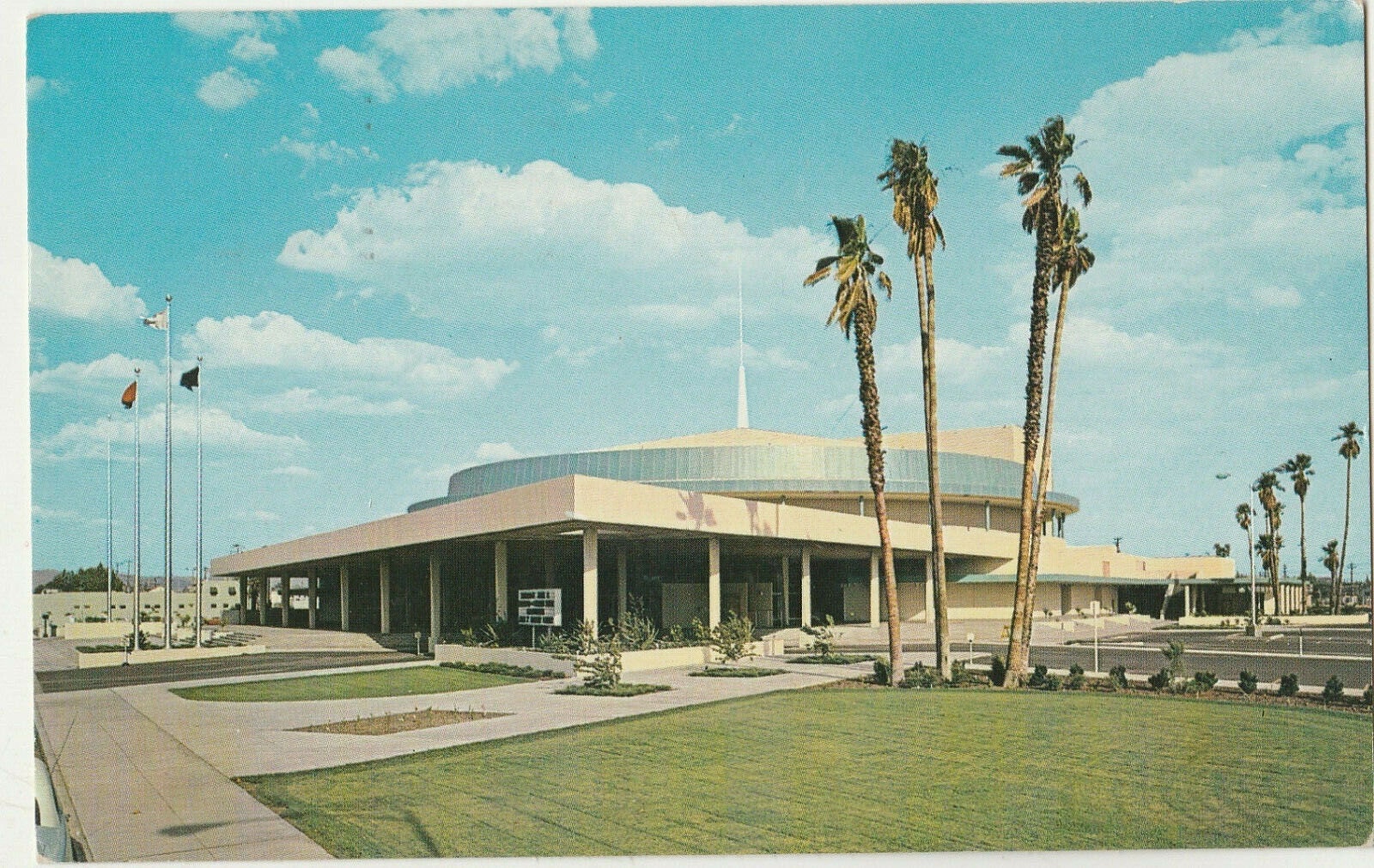
The Selland Arena, Fresno, CA
California's San Joaquin Valley is one of the great agricultural centers of the world. Highway 99 runs up and down the center of the state, and it did so long before Interstate 5, and all the towns along 99 are important centers of agricultural commerce. Although Fresno was not always a particularly large town, it was always an important center for dairy and farm products. By virtue of being roughly between Los Angeles, Sacramento and San Francisco, the city of Fresno became the biggest of the Valley cities. While its population was only 133, 929 in the 1960 census, by 1980 it had nearly doubled to 217, 129 (in 2010 it had doubled again, reaching 494, 665). By 1961, Fresno State College had joined the California State College system, and Fresno was starting to become a real city. Real cities, of course, build convention centers with an arena for sports, concerts and entertainment.
The Selland Arena, at 700 M Street in Fresno, was built in 1966, as part of the Fresno Convention and Entertainment Center. The arena had a capacity of about 6, 500, somewhat larger than Winterland, and quite large for the 1960s. Even though the city of Fresno was not large in the 60s and 70s, there were a lot of towns surrounding it, so there was a built-in audience for rock concerts. Also, touring rock bands discovered that they could play Fresno on an off-night between weekends in San Francisco and Los Angeles, so a lot of good bands played Fresno on school nights, particularly in the 1970s. In any case, once the Selland Arena was built, Fresno got its share of concerts.
The Grateful Dead played Selland Arena four times. The Dead had played the tiny Marigold Ballroom on May 12, 1967 (at 1833 E. Hedges, for you geocoders), but the first time the band played the Selland was February 17, 1968. They shared the bill with Country Joe and The Fish and a local band, Valley Fever. This was part of the tour that was mostly recorded for Anthem Of The Sun, but for whatever reasons, the Fresno event was not itself recorded. Back in 1968, the touring circuit wasn't fully built up yet, and San Francisco and Los Angeles bands would play shows in Fresno because it was an easy drive (for the roadies, anyway), and it filled up a night on the gig sheet. One of the many Valley teenagers who attended the show was Bob Weir's half-brother Jim Parber, then living in Merced, although neither Weir nor Parber knew of their relationship at the time.
The Grateful Dead came back on Friday, June 13, 1969. Deadlists shows the venue as "Fresno Convention Center," but its just another name for the Selland Arena. The Dead were supported by Aum and Sanpaku, both of whom were booked by the Millard Agency, as were the Dead. Members of both bands joined the group on stage at various times (Aum guitarist Wayne Ceballos and Sanpaku flautist Gary Larkey for certain), which suggests a rather loose evening.
The Grateful Dead returned again to the Selland Arena on Friday, July 19, 1974. The band was headlining at the enormous Hollywood Bowl on Sunday, July 21, so a Fresno booking made touring sense. A friend of mine went to the show and said that the event was relatively thinly attended, for a Dead show, and the band was spacey and the vibe was very weird. At one point, Phil Lesh even left the stage during "U.S. Blues." Because of the enormity of The Wall Of Sound, the Dead had to have two days between venues, so they could not have played anywhere between Fresno (Friday) and Hollywood Bowl (Sunday).
The California Tour, January 1978
In December, 1977, the Grateful Dead played the first of their extended New Year's runs. They headlined Winterland for three nights on December 29, 30 and 31, and when those shows sold out--it took a couple of days--they added an additional show on December 27. At the time, there was no particular precedent or expectation for this. It was the third time in the year that there had been a three night run in Winterland, but there was nothing special yet about the December run-up to New Year's.
Soon after the New Year's shows sold out, Bill Graham Presents announced a string of dates in California throughout January. The band avoided many major Southern California venues and played some more out of the way places. The Grateful Dead had been able to successfully play some out of the way places in New York, like Hamilton, Rochester and Binghamton and perhaps Graham felt that there was pent-up Grateful Dead interest in the California hinterlands. In any case, the Dead played San Bernardino, San Diego, Los Angleles, Santa Barbara, Bakersfield, Frenso, Sacramento and Stockton (see below for details).
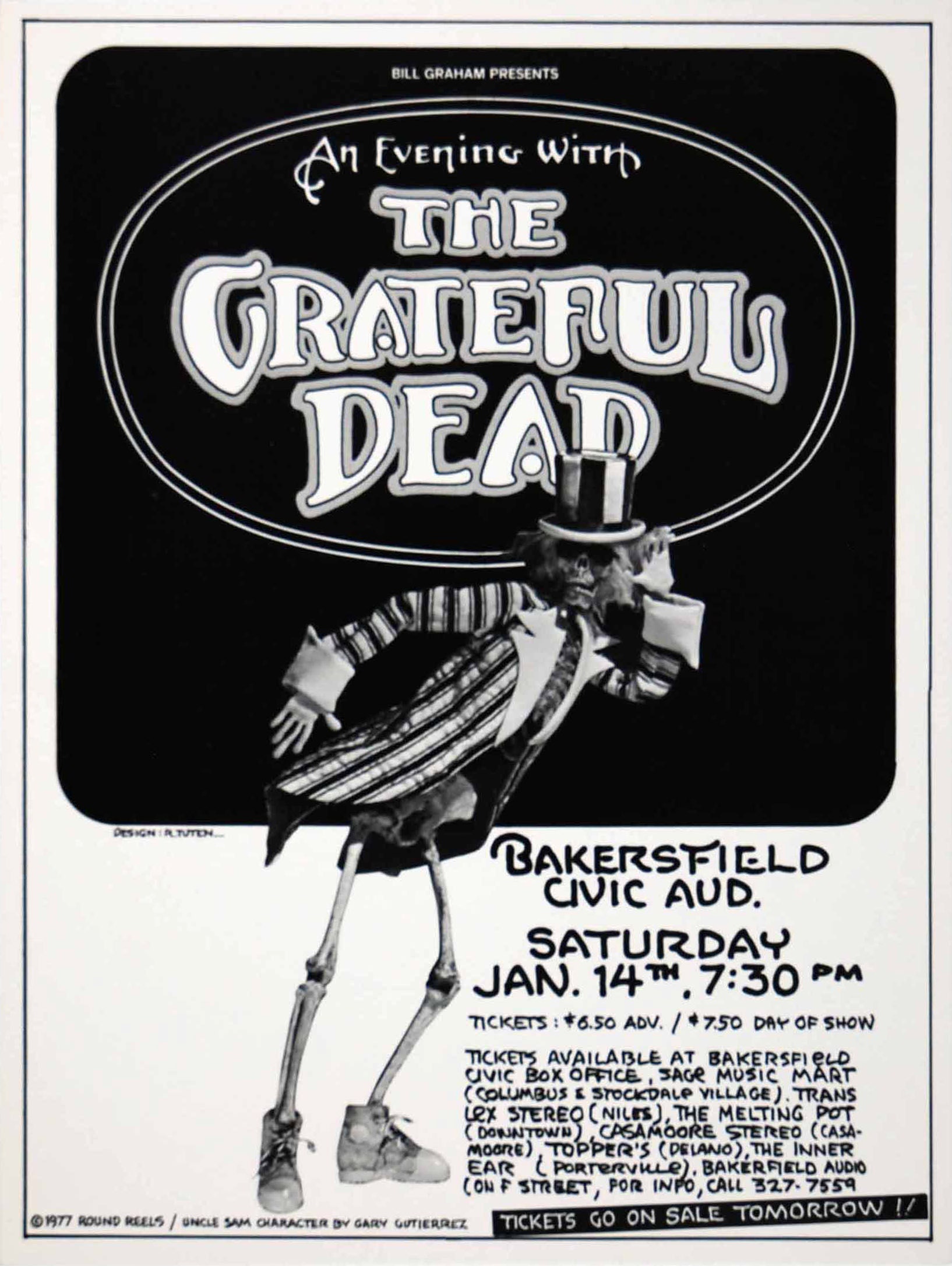
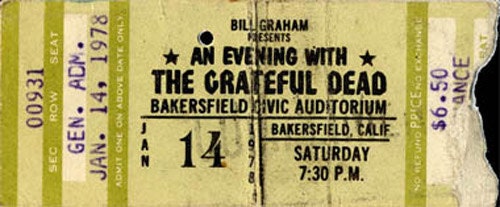
Touring California in the winter made good business sense, because unlike other parts of the country, there wasn't a serious threat of snow, so audiences would be willing to drive longer distances. This was important in the valley, where there were a fair number of rock fans, but spread out over a wide area. Now, I believe that the San Diego, San Bernardino and Los Angeles shows were successful, and the Santa Barbara show was a benefit in a relatively small theater. However, the San Diego, Sacramento and Stockton shows, while sold out, were in relatively small 3000-capacity venues, much smaller than anywhere the Dead could play on the East Coast, and not necessarily worth their time. Finally, the Fresno and the Bakersfield show were financial debacles. The band never played either city again (if Bakersfield had decent attendance, the venue would still have fallen into the "tiny" category of Stockton or Sacramento). It's hard to say how much the financial bath the band took at the two valley shows discouraged Bill Graham or other promoters from booking another January California tour, compared to other perhaps more prosaic reasons for not touring, but the fact is there was never any touring between New Year's and February after 1978, except to make up for canceled dates.
I was fortunate enough to attend the Grateful Dead show at Selland Arena on Sunday, January 15, 1978. It was one of, if not the, strangest Dead show I ever attended, and if I was forced to pick a show that was 'my favorite Dead show,' I would go with that Selland Arena show.
The Grateful Dead, Selland Arena. Fresno, CA January 15, 1978
The Grateful Dead were still a popular group in early 1978, but they seemed a little old hat. Winterland was a mid-sized hall, and they had shown they could sell out four nights, but the implication seemed to be that it was the same people coming over and over. The biggest acts, like Eric Clapton, played the Oakland Coliseum or the Cow Palace, and the Dead didn't seem to have that kind of heft. One dynamic that I was only dimly aware of at the time but am acutely aware of now was the willingness of East Coast Deadheads to get on the road to see the Dead. The Dead could draw in places like Binghamton or Hamilton because Eastern Deadheads were willing to get in the cars and go up and down I-90 and I-95 in order to see as many shows as possible.
Its my belief that Bill Graham promoted Grateful Dead shows in Bakersfield and Fresno because he thought that West Coast Deadheads would travel like East Coast ones, and that turned out not to be the case. Eastern Deadheads bought the traveling ethos into the Deadhead universe--Westerners didn't do it. In my case, although I was a poor college student at the time, the Grateful Dead had played ten shows at Winterland in 1977, and I had seen seven of them. What was the urgency to travel? I had gone to Santa Barbara to visit a friend and see the Dead (February 27, 1977), but it hadn't even occurred to me that I should go to the San Bernardino show the night before.
Starting about 1980, I met more and more people at Dead shows who had moved to San Francisco for better access to the Dead, and those were the people who thought nothing of driving to Los Angeles or Portland, or both, just to catch a show or two. That's what they had been doing in New Jersey or Chicago, so it was no change for them. Locals like me got sniffy about attending Dead shows outside my own county, but the Easterners made the Deadhead traveling circus a reality. Yet no one had figured that out at the time, and Bill Graham's promotion was a bit ahead of the curve.
The big rock event in San Francisco on that weekend was the Sex Pistols show at Winterland on Saturday, January 14. It turned out to be the last show of the Sid Vicious-era Pistols, and a legendary San Francisco rock moment. However, since I was going to see the Dead in Fresno on Sunday night, I had a paper to write, so I stayed home from the Sex Pistols even though my sister had an extra ticket, and thus missed one of the all-time rock events. Fortunately, my choice turned out to be worth it. However, my friend Jeff, who attended the Fresno show with us may have been the only person in history to have seen the Sex Pistols and the Grateful Dead on consecutive nights.
Fresno was about 3 hours from San Francisco, mostly on easy-to-drive Interstate 5. Even though we had all seen the Dead for three or four nights in December, it seemed exciting to actually adventure out into the valley to see the Dead. Of course, had we been Easterners, we would have gone to Santa Barbara (Friday Jan 13), Bakersfield (Saturday Jan 14) and then Fresno, but we didn't have that mindset yet. We also had tickets to the Wednesday night show in Stockton (Jan 18), about 90 minutes from Berkeley, but we were skipping the Sacramento show the night before (Tuesday Jan 17). Anyone from New Jersey or Boston or Utica would have thought we were nuts, but we were used to the Dead playing constantly, and missing a show didn't seem catastrophic.
One of the things that made the Fresno trip viable was my friend Jeff, whom I knew from the dorms. My other friends were from Los Angeles, and neither they nor I had ever set foot in Fresno. However, Jeff was from Fresno and had been to Selland Arena many times, so by bringing him with us we had a native guide. In the era before google maps and GPS, this was no small consideration. In any case, we grooved on down the road and made it to Fresno well before the start of the show, thanks to Jeff's expert directions. Although Jeff was from Fresno, he didn't express any pleasure at being back in his hometown, which he dismissed as hicksville.
When we got to the Selland Arena, we were in for a surprise. The place was your typical multi-purpose sports-enterntainment arena, used for basketball at Fresno State College and rock concerts for the city. Even if the Grateful Dead were only popular in an enclosed little universe, in San Francisco that universe was pretty intense. In 1977, Bill Graham Presents would open the doors at Winterland at 5:00pm because so many people were waiting in line, and there were volleyball games and movies to keep people entertained until the putative 7:00 pm start (which was often closer to 8:00). Thus it was a shock to get to Selland Arena a half-hour before show time and to find the arena largely deserted.
Now, if you've ever been in a large arena with a small crowd, it seems more barren than it really was. We were convinced that there were only a few hundred people there, but that is probably our minds exaggerating the emptiness. Still, even accounting for people who arrived late, people who were nestled in the dark seats far from the stage and people dancing around the lobby, there couldn't have been more than 2000 people there, tops. Most of the people didn't really seem like Deadheads, just people who lived in Fresno who liked rock music, and would go to see Johnny Winter or Kenny Loggins or whoever was playing (which my friend Jeff assured me was typical of Fresno at the time).
The Selland show was strange indeed: an arena the size of Oakland Auditorium, bigger than Winterland, with a very modest crowd that mostly sat bored in the seats, leaving the floor near the stage utterly deserted. You know those t-shirts that they used to sell at Dead shows that had a logo and words to the effect of "Grateful Dead 1966-1980: Sold Out!"? They didn't go to Fresno.